
Identify what needs attention
Use the current facts to decide which part of the response still needs work.
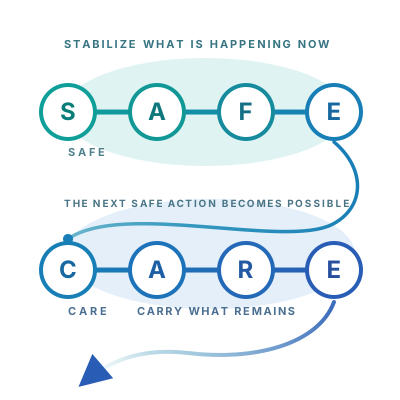
SAFE CARE is a practical method for responding to a campus crisis from the first report through immediate action, follow-up, and completion.
A concern may first reach a roommate, resident assistant, faculty member, dispatcher, clinician, crisis responder, or campus safety professional. Each person may see a different part of the problem and may have different responsibilities.
SAFE CARE gives everyone the same basic response process. It helps people decide what needs attention now, take the next safe step, connect unfinished work to the right person, and respond again when conditions change.
A crisis can break down when information, responsibility, or follow-up is lost between people or departments. A referral may be sent but never accepted. Help may arrive without the full picture. A student may appear calmer even though important needs are still unresolved.
SAFE CARE keeps the response connected. It does not replace emergency procedures, clinical judgment, campus policy, or specialized responders. It helps each person act within their role and make sure the next step is clear.
You will learn a five-part response for receiving a concern, handling the immediate situation, deciding what should happen next, coordinating follow-up, and deciding whether the response is finished or needs a new plan.
Receive and Prepare→SAFE→Transition→CARE→Finish or Replan
Start of the response
Get the concern, find the person or location, identify anything that cannot wait, and prepare a safe first response.
Immediate response
Secure the area. Assess what is happening. Form Rapport so communication is possible. Engage and Stabilize by taking the next safe action.
Transition
Decide whether to continue SAFE, ask for help, increase the response, or move into CARE for follow-up and coordination.
Continuing response
Connect the right resources, make sure someone owns the next step, share important information, and confirm that follow-up occurs.
Completion
Close the response only when the needed work is complete. Keep it open when follow-up remains, or make a new plan when conditions change or the original plan fails.
Practice question
The immediate danger has been controlled. Transportation to an approved service is delayed. No one is monitoring the wait, and no one knows what will happen if transportation does not arrive.
The correct choice depends on what still needs to be done. In this example, the immediate danger is controlled, but the next service has not taken over. The response could still fail unless someone manages the connection and follow-up.
Use the current facts to decide which part of the response still needs work.
Take a clear action that fits the situation and your role.
Name who owns the next step, what should happen, and what to do if the plan fails.
Return to SAFE or CARE when danger returns, communication is lost, a plan fails, or new information appears.
This is self-guided skills training. It teaches a shared response process and gives you practice choosing the next step.
Completing the course does not provide certification, clinical authority, emergency authority, or permission to act outside local policy. Your institution determines what you are authorized and trained to do.